💡 Key Takeaways
- Core Structure: The excavator track link assembly is mainly composed of track links, pins, bushings, and floating oil seals, designed to bear heavy loads and transmission.
- Manufacturing Process: Utilizing 35MnB premium alloy steel, precision die forging, and induction quenching heat treatment, ensuring surface hardness reaches HRC 52-58.
- Selection Standards: Covering dry track chains and sealed & lubricated track chains (SALT), meeting diverse operating conditions from mining heavy-duty to general earthmoving.
- Daily Maintenance: Regularly measuring pitch elongation, adjusting tension, and cleaning debris to effectively prevent abnormal wear.
- Fortrak Advantages: Headquartered in Quanzhou, compatible with 20+ global brands, offering 1,000+ ready-stock specifications, 100% factory-direct pricing, and a 2000-hour warranty.
In modern engineering machinery operations, the stability and durability of the undercarriage system directly determine the overall equipment uptime and operating costs. As the most core and highly stressed component of the undercarriage, the excavator track link assembly supports the weight of the entire machine and transmits powerful tractive force. For industry buyers, equipment distributors, and engineering contractors, deeply understanding the structural characteristics, manufacturing processes, type differences, and scientific maintenance methods of track link assemblies is the key to optimizing equipment procurement decisions and reducing total cost of ownership (TCO). As a professional manufacturer deeply rooted in undercarriage parts for years, Fortrak is committed to providing global clients with high-quality and competitive track link products. This article will comprehensively analyze this core component from a professional perspective.
Core Structure Analysis of Track Link Assemblies
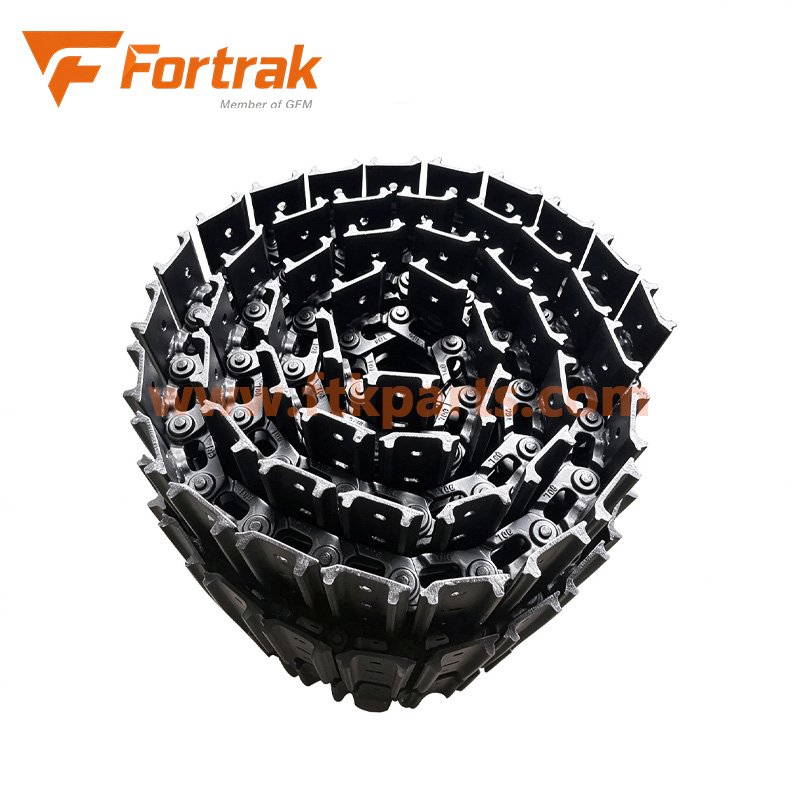
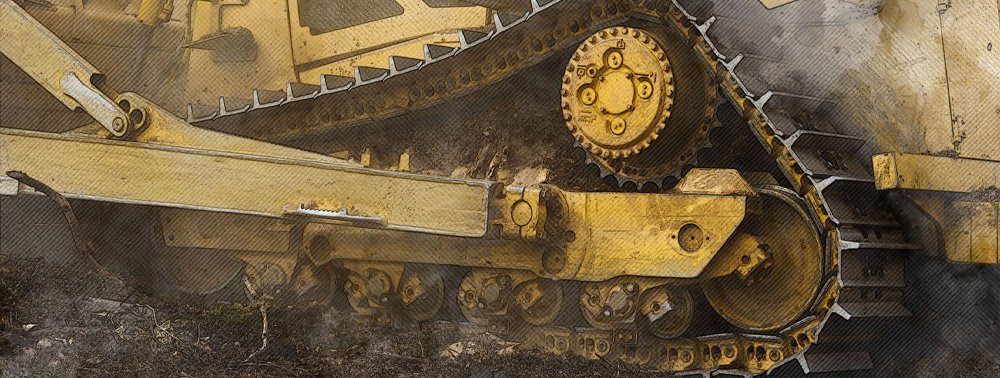
A track link assembly is not a single piece of iron, but a complex motion assembly composed of multiple precision components connected through mechanical fits and interference connections. In-depth analysis of its internal structure helps us accurately locate wear hazards during daily inspections.
From a macroscopic view, a standard track link assembly mainly includes the following core parts:
- Track Links: Acting as the skeleton of the entire chain, they bear huge bending stresses and ground impacts, usually forged from high-strength alloy steel.
- Pins and Bushings: They form the articulation points between link sections. Pins insert into the bushings, enduring high-frequency shear forces and frictional forces when the excavator walks and turns.
- Seals: High-quality lubricated track chains are equipped with special rubber floating oil seals to lock in internal lubricating oil while completely isolating external abrasives such as mud, sand, and moisture.
In actual harsh operating conditions (such as rock mines or high-moisture muddy terrain), the wear mechanisms of dry track chains and sealed & lubricated track chains have essential differences. Data shows that track link assemblies adopting high-quality lubrication and sealing designs can extend the wear life of internal pins and bushings by more than 30% compared to traditional unlubricated track chains.
💡 Frequently Asked Questions
- Q: What core components make up an excavator track link assembly?
- A: An excavator track link assembly is mainly composed of track links, pins, bushings, sealing rings, and connecting bolts, which work together to complete machine load-bearing and traction transmission.
High-Strength Track Link Manufacturing Process
High-quality undercarriage parts stem from strict material selection and leading manufacturing processes. Inferior track links often experience elongation, fracture, or cracking within just a few hundred hours, root-caused by insufficient raw material purity and heat treatment defects.
As a professional manufacturing factory, Fortrak strictly implements top international manufacturing standards when producing an excavator track link assembly:
- Premium Raw Material Selection: Carefully selected high-quality boron steels or alloy structural steels such as 35MnB and 40Mn2, ensuring material hardenability and tensile strength from the source.
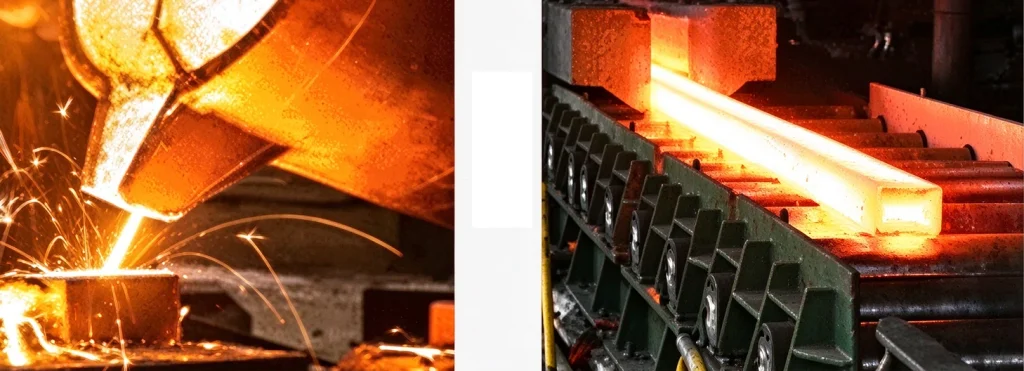
- Precision Forging Technology: Utilizing large-scale precision forging equipment for multi-directional die forging, making the metal streamline completely conform to the external contour of the track link, completely eliminating internal porosities and micro-cracks.
- Deep Heat Treatment Process: Combined with advanced automated induction quenching production lines, deep quenching is performed on the track surfaces and pin holes, achieving a surface hardness of HRC 52-58 and a hardened layer depth of 8-12mm, thus ensuring exterior wear resistance and interior toughness.
Every component must pass coordinate measuring machines, flaw detection, and hardness tests before leaving the factory to ensure it meets or even exceeds industry standards.
💡 Frequently Asked Questions
- Q: Why is the heat treatment process crucial to track link service life?
- A: Heat treatment enables the track link surface to acquire high hardness to resist severe wear while maintaining core toughness to withstand repeated impact loads, thereby preventing fractures during heavy-duty operations.
Common Track Chain Types and Selection
According to different operating environments and machinery tonnages, various types of track structures exist in the market. B2B buyers must scientifically match them based on actual working conditions when conducting cross-border bulk procurement or spare parts planning.
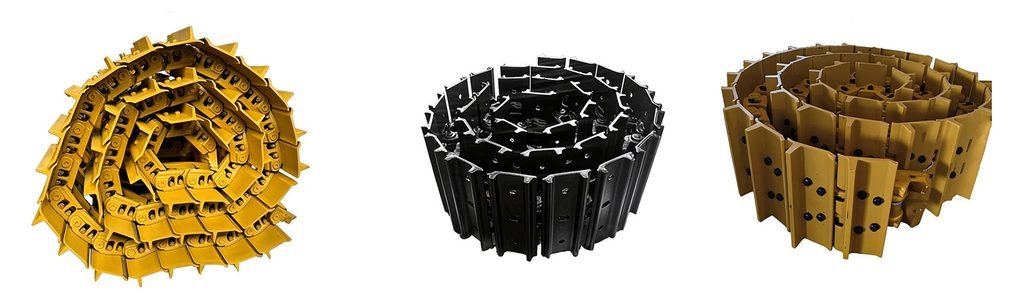
The table below compares the application scenarios and performance characteristics of mainstream track chain types:
| Chain Type | Structural Features | Typical Applicable Conditions | Advantages & Disadvantages |
|---|---|---|---|
| Dry Track Chain | No lubricating oil seal between pins and bushings, relying on clearance fit | General earthwork, sandy loam, farmland | Simple structure, low initial procurement cost; shorter lifespan under high-wear abrasive conditions |
| Sealed & Lubricated Track Chain (SALT) | Internal specialized lubricating oil injected with high-quality floating oil seals | Heavy-duty mining, rock blasting, high-moisture mud | Effectively prevents internal dry wear of pin-bushings, significantly extending service life; high demands on seal quality |
| Heavy-Duty Thickened Track | Increased track link height and rib thickness, enhanced structural rigidity | 20-ton to 50+ ton large excavator heavy-duty operations | Extremely strong impact resistance, greatly reducing undercarriage sag and derailment risks on heavy-duty units |
To address complex overseas market demands, Fortrak offers 1,000+ ready-stock specifications, providing clients with comprehensive track link assembly selection support ranging from standard earthmoving to extreme mining heavy-duty applications.
💡 Frequently Asked Questions
- Q: Which track link assembly should be selected for heavy-duty mining operations?
- A: Under heavy-duty mining or high-wear rocky conditions, it is recommended to prioritize sealed & lubricated track chains (SALT) or heavy-duty thickened track link assemblies, whose built-in lubrication and reinforced sealing effectively resist abrasive intrusion and exponentially lower wear rates.
Daily Maintenance and Inspection of Track Link Assemblies
Scientific maintenance not only identifies potential faults in time but also minimizes unplanned equipment downtime losses. For operators and equipment fleet managers, mastering a standardized undercarriage inspection and maintenance method is vital.
Practical technical measures to extend the service life of a track link assembly include:
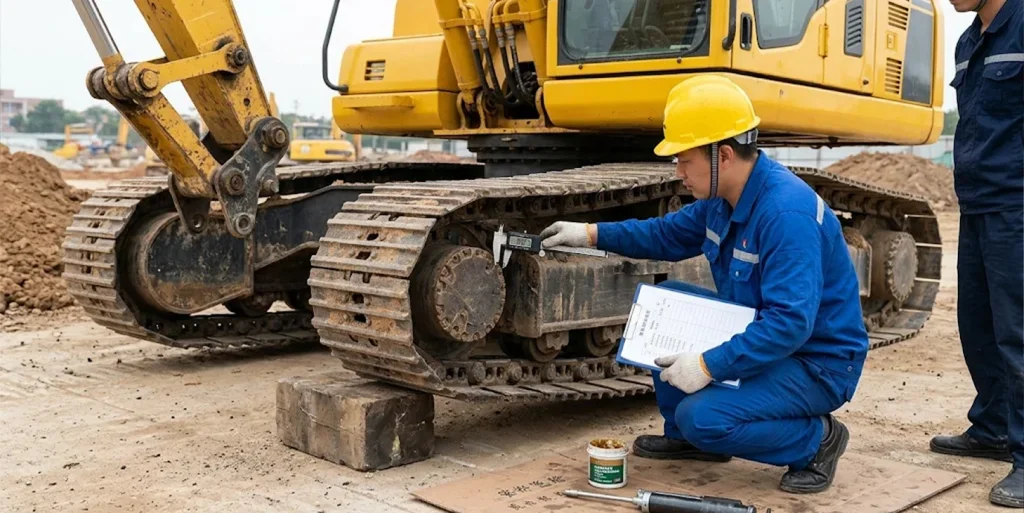
- Regularly Measuring Pitch Elongation: Use dedicated calipers to measure the center distance of adjacent pins. When the total chain length stretches by more than 2.5% to 3%, timely replacement or pin & bushing turning is mandatory, otherwise, abnormal wear on sprockets and rollers will accelerate.
- Maintaining Proper Track Tension: Excessively tight tracks cause pins and bushings to endure over-high frictional forces, accelerating heat generation and elongation; excessively loose tracks easily cause derailment. Track tension cylinders should be adjusted regularly via grease guns based on working ground conditions (such as mud or hard soil).
- Clearing Debris and Regular Washing: After operating in clay- or stone-heavy conditions, accumulated soil and gravel inside track shoes and links must be cleared promptly to prevent jamming that disables the tensioning system.
💡 Frequently Asked Questions
- Q: How to determine whether a track link assembly needs maintenance by measuring track pitch?
- A: Typically measured by checking the total length of a certain number of links (such as 4 or 8 pitches) and comparing it with factory standard values. When the elongation rate reaches the 2.5% warning line, evaluate whether a Pin & Bushing Turn operation is necessary.
Fortrak Track Link Purchasing Guide
Against the backdrop of globalized supply chains, B2B buyers looking for third-party undercarriage suppliers prioritize brand compatibility, quality reliability, and supply chain responsiveness.
As a professional manufacturer originating from Quanzhou, Fujian, China, Fortrak has established an outstanding reputation in the industry through years of overseas export experience:
- Full Brand Compatibility Coverage: Track link assemblies provided by Fortrak are fully compatible with leading global and Chinese brands, including Komatsu, Hitachi, Caterpillar, Volvo, Kobelco, Daewoo, Doosan, Hyundai, Kubota, Bobcat, Yanmar, Sanyao, Liugong, Xugong, Kato, and Yuchai (over 20 mainstream brands).
- Factory-Direct Pricing & Competitive Edge: Fortrak adopts a 100% factory-direct sales model, eliminating intermediate markups. We provide a quality warranty period of no less than 1 year or 2,000 hours, ensuring worry-free procurement for global distributors and contractors.
- Flexible OEM/ODM Customization Services: Supporting personalized services such as drawing-based customization, trademark customization, packaging design, and laser marking, helping overseas clients rapidly enhance brand awareness and market competitiveness.
💡 Frequently Asked Questions
- Q: How to ensure 100% matching with original machines when purchasing third-party excavator track link assemblies?
- A: Buyers should accurately provide excavator brand models, undercarriage part numbers, or verify core parameters (such as pitch, pin hole diameter, bolt hole spacing). Fortrak possesses a comprehensive technical database to ensure 100% seamless replacement.
Selecting high-quality undercarriage components is the core prerequisite for ensuring efficient engineering project progression. As a trusted heavy machinery undercarriage expert, Fortrak looks forward to cooperating with global distributors, wholesalers, and engineering contractors.
- Get Exclusive Quotes and Product Catalogs: Contact the Fortrak expert team anytime to receive 100% factory-direct quotes and customized solutions, letting us empower your business to achieve new growth!
| Claim Direct Factory Price | WhatsApp:+86 18959708757 | Email:sales@ftkparts.com |
In summary, as the “power spine” of excavator undercarriage systems, the excavator track link assembly directly dictates the operational efficiency and return on investment of engineering machinery through its structural rationality, manufacturing process precision, and daily maintenance standards. By selecting a source factory like Fortrak—possessing robust manufacturing strength, rigorous quality control systems, and a 2000-hour extended warranty commitment—global buyers can effectively compress supply chain costs while delivering exceptional, stable, and durable construction experiences to end users. In future engineering machinery markets, high-quality undercarriage parts will undeniably become the solid cornerstone for enterprises to win competitive advantages.